Calibrating heat for a room that spans three generations
Thai food at a wedding lives or dies on one decision, and it is not which curries to serve. A room containing grandparents, small children and guests unfamiliar with the cuisine cannot be served a single heat level, and the usual outcome is that a third of the room eats jasmine rice and pad thai and nothing else.
We cook the curries to a moderate base and bring the heat separately, so the guest who wants it fierce gets it fierce and the guest who does not is not quietly excluded from the meal they came to.
Green curry chicken, panang beef and massaman all come zabiha-sourced, and there is no fish sauce in the vegetarian dishes — a detail that matters more at a wedding than anywhere else, because it is the one meal where a guest will not ask.
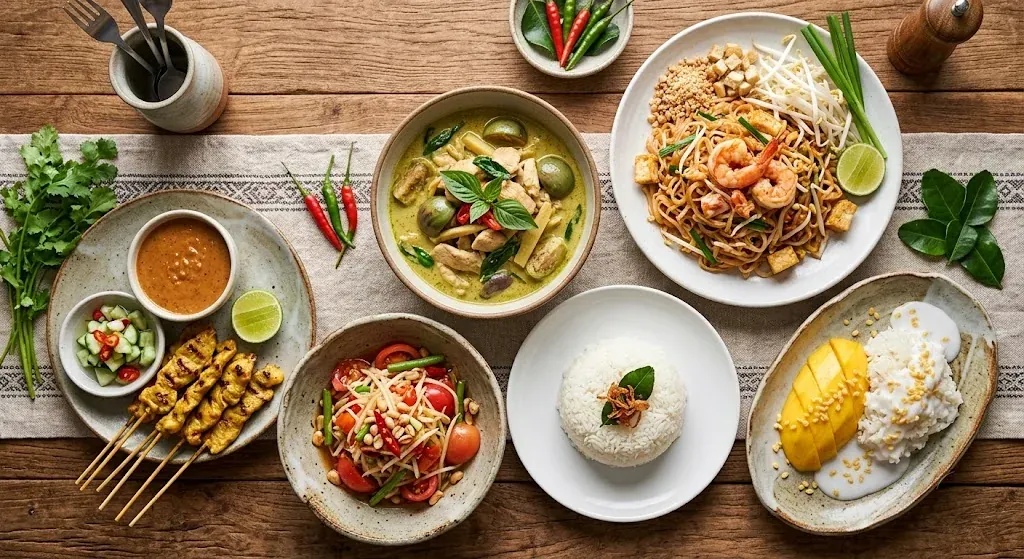
- Green curry chicken, panang beef curry and massaman — heat served alongside
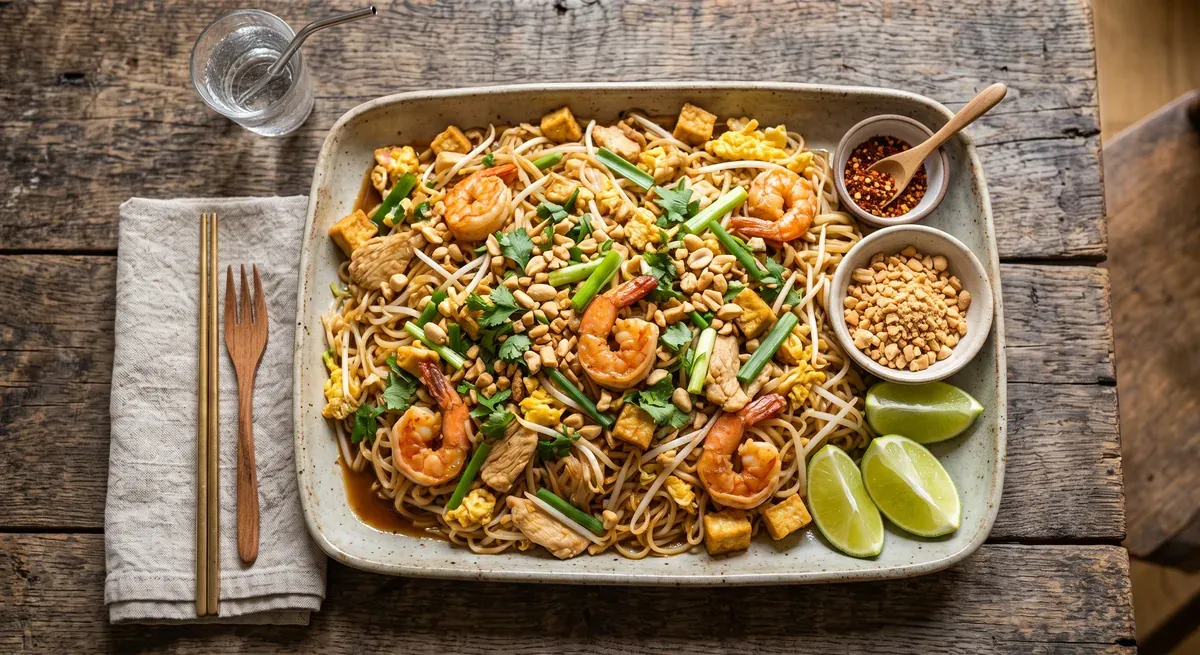
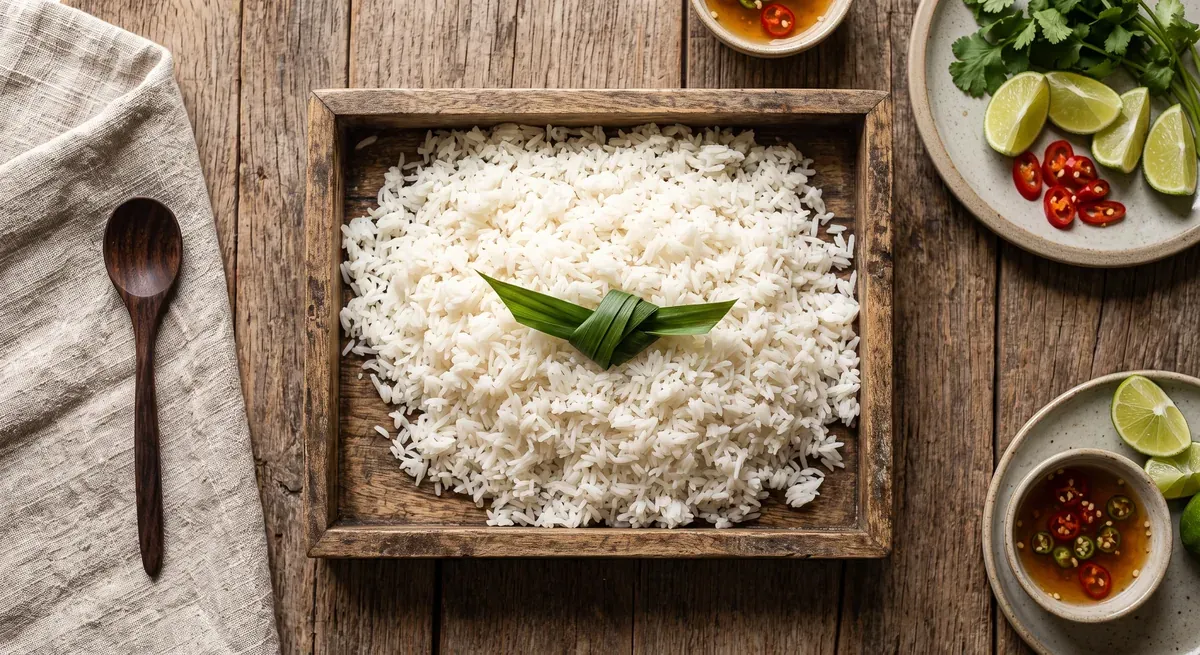
- Pad thai noodles and jasmine rice as the base everybody eats
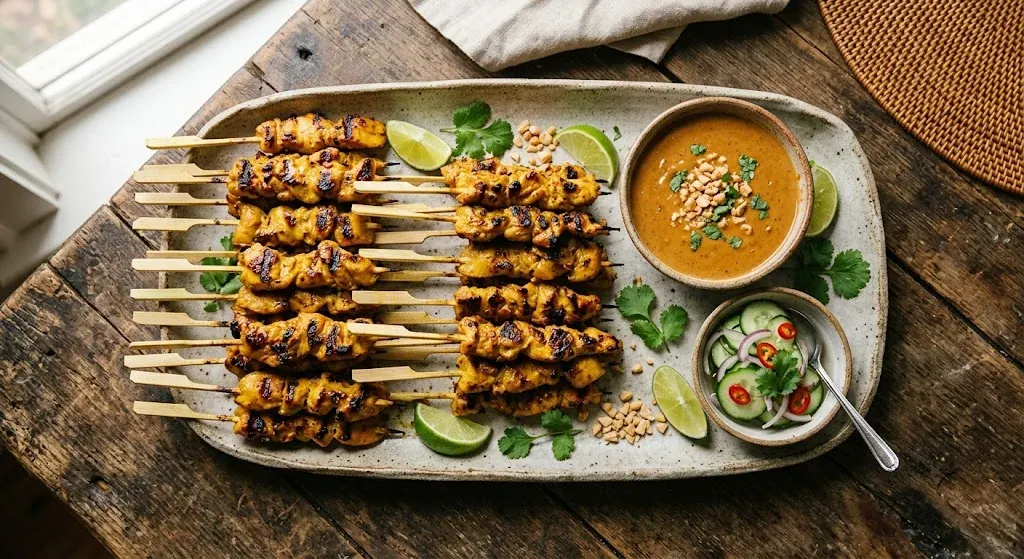
- Chicken satay skewers, tod mun fish cakes, vegetable spring rolls
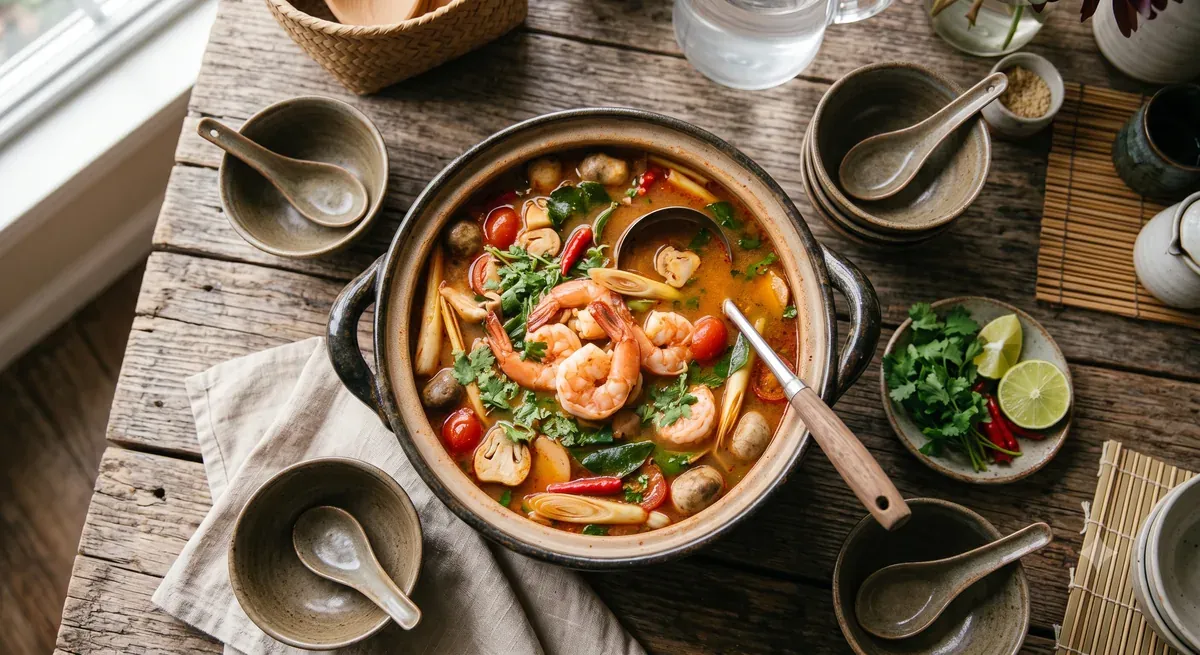
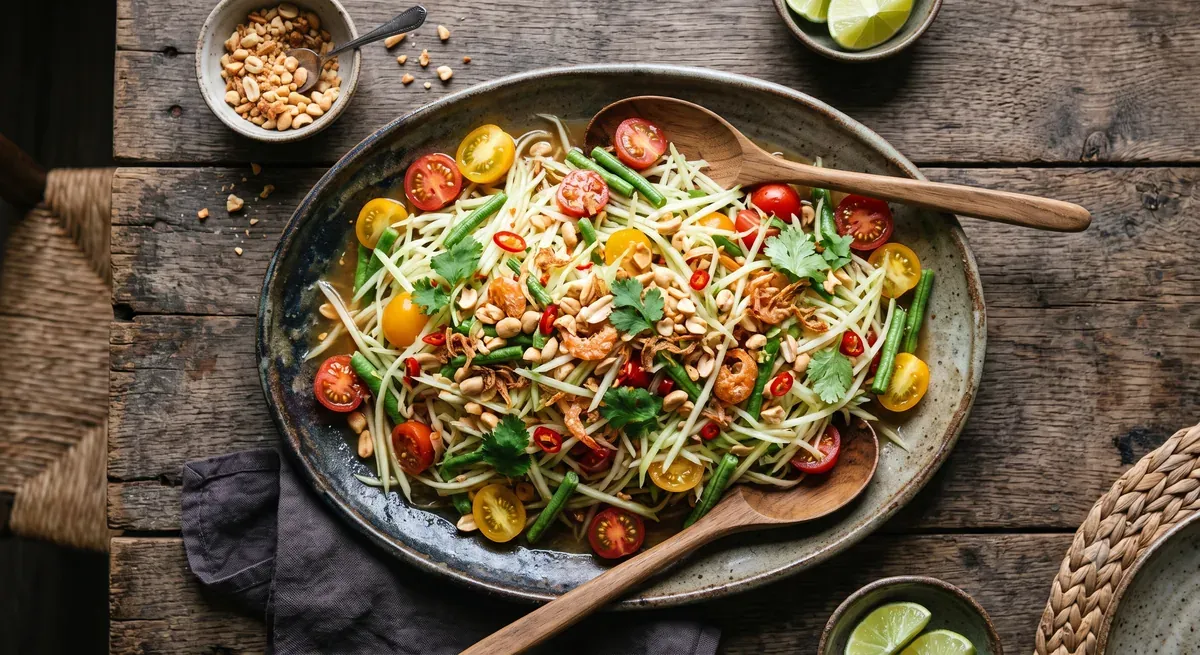
- Papaya salad and tom yum soup service
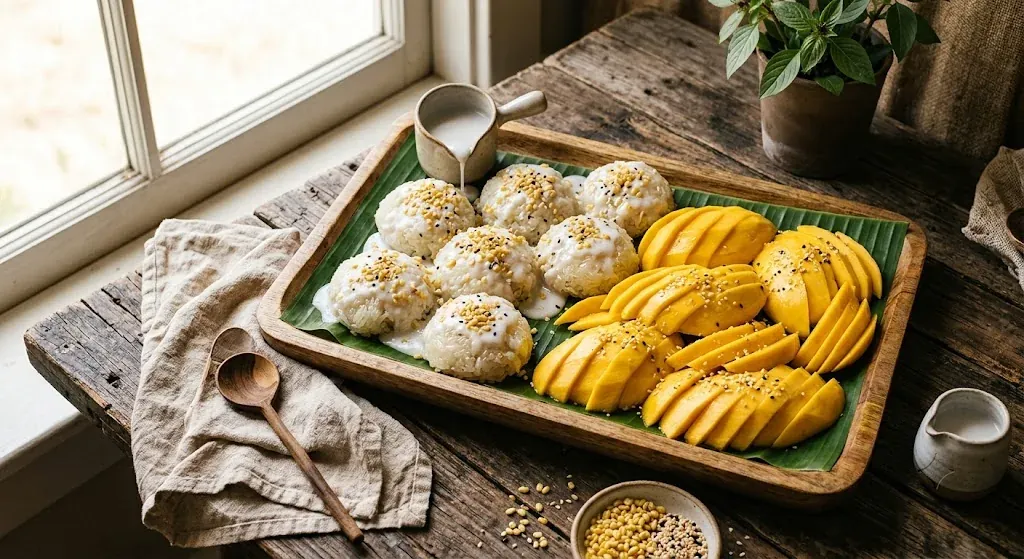
- Mango sticky rice and Thai tea panna cotta
Curry holds, which a wedding needs
Weddings overrun. Curries are among the few mains that are genuinely as good an hour late as on time — better, arguably — which makes Thai a sensible choice for a ceremony with an uncertain finish or a venue with a long walk from kitchen to room.
Pad thai is the exception and we cook it in batches through service rather than all at once, because reheated noodles are the one thing on this menu that tells the truth about how long they have been waiting.
Satay for the standing hour
Chicken satay skewers and spring rolls are the best passed items on this menu, for the practical reason that both are eaten with one hand while holding a drink and neither drips. At a wedding that is most of the specification.
Mango sticky rice sits beside the cake rather than instead of it, and is the dessert guests ask about afterwards.