Recurring program
Breakroom & Pantry Stocking
Breakroom and pantry stocking on a schedule you set — snacks, drinks and fresh, counted and restocked so the shelf is never the thing that ran out.
What's included
Everything in the Breakroom & Pantry Stocking rotation
Par-level restocking
An agreed count per item, checked every visit — not a repeat of the last order. You get the count each time.
Dry goods and fresh
Snacks, coffee, tea and drinks on one cycle; fruit, yoghurt, hummus and crudités on a tighter fresh cycle.
Halal by default
Everything on the shelf is halal, so nobody reads packets. Vegan, gluten-free and nut-free held as standing lines.
Stock rotation
Front-to-back rotation so nothing expires at the back of a cupboard. Packaging broken down and taken away.
Your visit cycle
Weekly, twice weekly or fortnightly — with fresh scheduled separately from dry goods.
One monthly invoice
Itemized by visit and by item, net-30 for established accounts. Consumption visible, no annual lock-in.
How it works
Breakroom & Pantry Stocking, in practice
Counted, not guessed
Most pantry problems are inventory problems. We build a par level for each item with you — how many of each thing the shelf should hold at the start of a week — and every visit is a count against that par, not a delivery of whatever was on the last order. That means the coffee does not run out on Thursday while three boxes of an unloved granola bar go stale in the back. You get the count after each visit, so consumption is visible rather than anecdotal, and the par list gets tuned as the office grows or its habits change.
Snacks, drinks, and actual fresh food
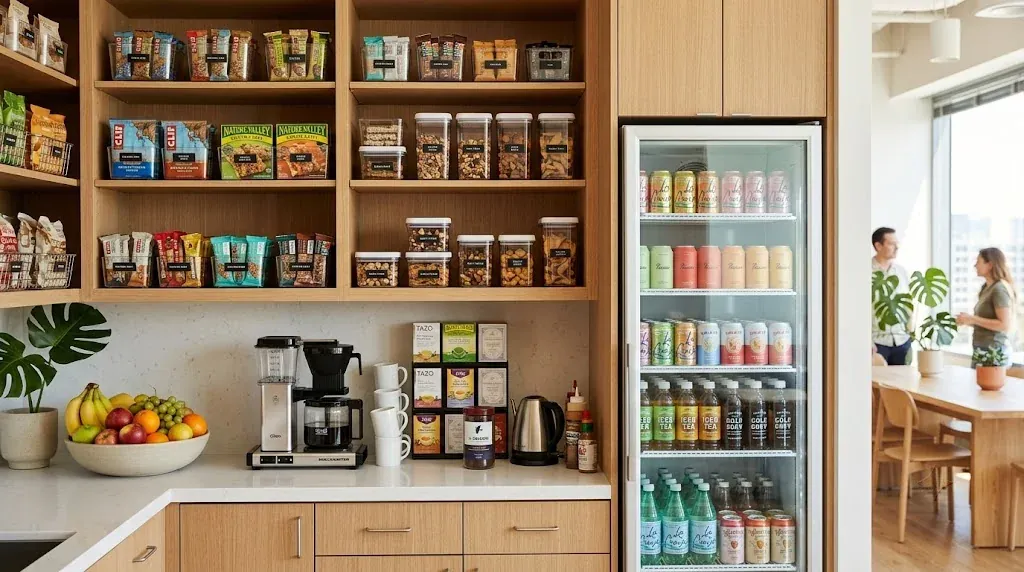
The shelf-stable half is straightforward: nuts, dried fruit, crackers, granola and protein bars, chocolate, crisps, tea, coffee and filters, sugar and long-life milk, bottled water, sparkling water, juices and sodas. The part most stocking services skip is fresh — whole fruit, cut fruit cups, yoghurt, labneh, hummus and vegetable crudités, sandwiches and wraps where a fridge can hold them. Fresh runs on a tighter cycle than dry goods, so the two are scheduled separately rather than forced onto one delivery rhythm.
Halal by default, labeled throughout
Everything we stock is halal, so nobody has to read the back of a packet before taking something from a shared shelf. Vegan, gluten-free and nut-free options are held as standing lines rather than substitutions, and each item carries its contents and allergens. If the office has a specific allergy to design around — a nut-free floor, for instance — that becomes a rule on the par list rather than a note someone has to remember at reorder time.
Set the cycle, get one invoice
You choose the visit cycle: weekly, twice a week, or fortnightly for a smaller office, with fresh on its own tighter rhythm if you want it. We rotate stock front-to-back so nothing expires at the back of a cupboard, break down and take away the packaging, and leave the breakroom tidier than we found it. Billing is one consolidated monthly invoice itemized by visit and by item, net-30 for established accounts, so a workplace lead can see exactly what the office consumed. No annual term — pause for a closure or a quiet month and restart without re-onboarding.
Questions
Before you ask
How do you decide what to restock?
Do you stock fresh food, or only packaged?
Is everything halal?
How often do you visit?
Who deals with expiry and packaging?
How is it billed?
Explore Carthage Kitchen
Related Occasions, Cuisines & Service Formats
Browse our full culinary network across Los Angeles — curated for every headcount, dietary track, and event style.
See every occasion we cater, every recurring program and every way we serve.

Begin the commission
Set the date. We open the doors.
Weddings, premieres, Tuesday lunches — every commission starts with two fields and ends with a menu sketch in your inbox within one business day. No spam, no upsell call.